Less Is More: The Quiet Magic of Baking Small and Loving Every Bite
Somewhere along the way, American food culture got tangled up in the idea that bigger automatically means better. Costco-sized everything, bulk bins, sheet pans stacked to the ceiling. And honestly? There's a time and a place for all of that. But when it comes to home baking — the kind that fills your kitchen with warmth and lands something genuinely delicious on the table — smaller is almost always the smarter, more satisfying choice.
Here at Sweet Pea Bakery, small-batch baking isn't just a technique. It's the whole heart of what we do. And if you haven't fully embraced it yet, we'd love to share exactly why it changes everything.
What We Mean by "Small-Batch"
Small-batch baking doesn't mean baking less often. It means baking in intentional quantities — a half-dozen muffins instead of two dozen, one round cake layer instead of a stacked four-layer production, a small pot of lemon curd that you'll actually finish before it turns. It's about matching what you make to what you (and the people you love) will genuinely enjoy at peak freshness.
Industrial bakeries produce in volume because volume is their business model. Your home kitchen has a completely different goal: flavor, connection, and a little bit of joy baked into every batch. Those goals don't scale up the same way.
The Freshness Factor Is Real
Here's a truth that professional bakers don't always shout from the rooftops: most baked goods are at their absolute best within hours of coming out of the oven. Cookies that snap perfectly at 3 p.m. are a little softer and less interesting by the next afternoon. A loaf of banana bread is transcendent when still faintly warm, and honestly just fine a day or two later.
When you bake smaller quantities, you're set up to eat things at their peak. You're not staring down 48 cookies trying to figure out who to offload them on before they go stale. You made 12, they were perfect, everybody was happy. That's it. That's the whole story.
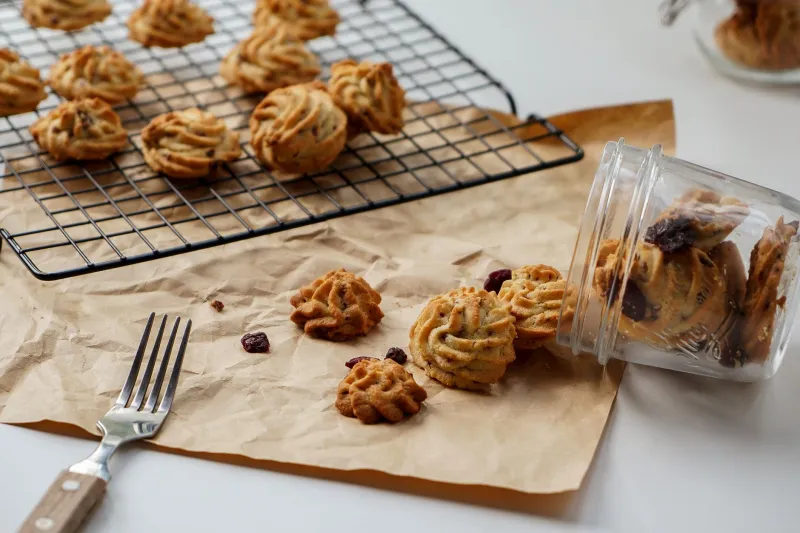
Freshness also affects texture in ways that are hard to overstate. The crunch of a properly baked biscotti, the crackle on a macaron shell, the tender crumb of a just-baked muffin — these qualities are fleeting. Small-batch baking is basically a commitment to catching them at their best.
Your Wallet Will Thank You
Let's talk money, because baking with quality ingredients — real butter, good vanilla, fresh eggs from the farmers market — adds up. When you're scaling down your recipes, you can absolutely afford to level up your ingredients.
Think about it this way: a half-batch of chocolate chip cookies that uses a really excellent dark chocolate and a good flaky sea salt on top costs only marginally more than a full batch made with standard chips. But the result? Completely different experience. You spent less overall, got fewer cookies, and every single one was worth eating.
Small-batch baking is also a natural hedge against waste. How many times have you made a full recipe of something, eaten three pieces, and watched the rest slowly dry out on the counter? Ingredients cost money. Throwing away half a bundt cake feels bad. Baking a smaller version means almost nothing goes to waste — and that matters both financially and emotionally.
The Learning Curve Gets Steeper (in the Best Way)
Here's something that surprises a lot of home bakers when they first go small: you actually learn faster. When you're making a half-dozen croissants instead of two dozen, every single one matters. You pay closer attention to the lamination, the proof, the color. You notice what worked and what didn't in a way that's harder to track when you're churning out a full production batch.
Small-batch baking invites precision. You start weighing ingredients instead of eyeballing. You notice how the dough feels at different stages. You develop intuition because you're genuinely present in the process, not just executing steps on autopilot.
This is exactly how great bakers are made — not by scaling up, but by slowing down and paying attention.
The Emotional Dimension Nobody Talks About Enough
Baking a small batch of something feels intimate. There's a reason a tin of six hand-decorated shortbread cookies feels more special than a grocery store box of thirty-six. The care embedded in smaller quantities is perceptible. People feel it when they receive it. You feel it when you make it.
There's also something genuinely meditative about small-batch work. You're not racing to get through a mountain of dough before it over-proofs. You're not washing every bowl in your kitchen three times over. You mix a little, shape a little, bake a little, and then you sit down and enjoy what you made. The whole arc of the experience fits inside an afternoon without stress.
For a lot of us, that's why we bake in the first place — not to produce, but to feel something. Small-batch baking keeps that feeling front and center.
Practical Tips for Going Small
If you're used to full-recipe baking and want to start scaling down, here are a few things that'll make the transition smooth:
Invest in smaller pans. A 6-inch cake pan, a small loaf pan, a quarter sheet tray — these are game-changers for small-batch work. Most big-box stores carry them, and they're not expensive.
Learn to halve recipes confidently. Eggs are the trickiest part. For recipes calling for one egg, use one whole egg in the half batch. For two eggs, crack both, beat them lightly, and use half the mixture. It sounds fussy but takes about thirty seconds.
Use a kitchen scale. Scaling down by weight is far more accurate than by volume. A digital scale under $20 will serve you better than almost any other baking tool you own.
Adjust your bake times. Smaller quantities often bake a little faster. Start checking for doneness a few minutes earlier than the original recipe suggests.
Embrace the freezer strategically. Small-batch doesn't mean you can never bake ahead. Freeze unbaked cookie dough balls, raw scone wedges, or shaped rolls. Then bake just what you need, straight from frozen, whenever the craving hits.
A Different Kind of Abundance
There's a version of abundance that looks like overfull counters and containers stacked in the fridge. And then there's the kind of abundance that comes from having exactly the right amount of something genuinely wonderful.
Small-batch baking is about the second kind. It's about a warm kitchen, a small and beautiful thing you made with your own hands, and the simple pleasure of sharing it with someone you love before it's gone.
That's the Sweet Pea way. And honestly, it's the best way we know.