Is Your Pantry Working Against You? How to Reset Your Baking Staples for a Fresh Start
Spring has a way of making us want to throw open the windows and toss out anything that's been quietly collecting dust. And while most of us think about closets and junk drawers during this annual purge, there's one spot in the kitchen that deserves just as much attention: the baking pantry.
Here at Sweet Pea Bakery, we believe that great baking starts long before the mixer turns on. It starts with what's already on your shelves. A well-maintained pantry isn't just organized — it's alive, stocked with ingredients that are genuinely ready to do their job. Old, stale, or improperly stored staples can quietly sabotage even the most carefully followed recipe, and most of us don't realize it until something goes flat (literally).
So let's dig in. Here's how to audit your baking pantry season by season — starting right now.
Start With the Usual Suspects: Leavening Agents
Baking powder and baking soda are the unsung heroes of the pantry, but they have a shelf life that most people ignore. Baking powder typically stays effective for about 6 to 12 months after opening, while baking soda can hold its potency for up to a year — but both lose their punch faster than the labels suggest, especially if they've been exposed to humidity or heat.
Here's the quick test for baking powder: drop a teaspoon into a cup of hot water. If it bubbles vigorously, you're good. If it just kind of... sits there? Time for a new can.
For baking soda, stir a teaspoon into a small bowl with a splash of white vinegar or lemon juice. A strong, immediate fizz means it's still active. A weak reaction means it's on its way out.
Make a habit of writing the date you opened each container on the lid with a marker. It takes two seconds and saves you from a dozen flat pancakes down the road.
The Flour Situation (Yes, Flour Goes Bad)
All-purpose flour kept in a sealed container at room temperature is generally fine for about 6 to 8 months. Whole wheat flour, though, is a different story — because it retains more of the grain's natural oils, it can go rancid in as little as 1 to 3 months at room temperature. If your whole wheat flour smells slightly sour or off, trust your nose and toss it.
The fix? Store whole grain flours in the freezer. Just bring them to room temperature before baking, and they'll last up to a year.
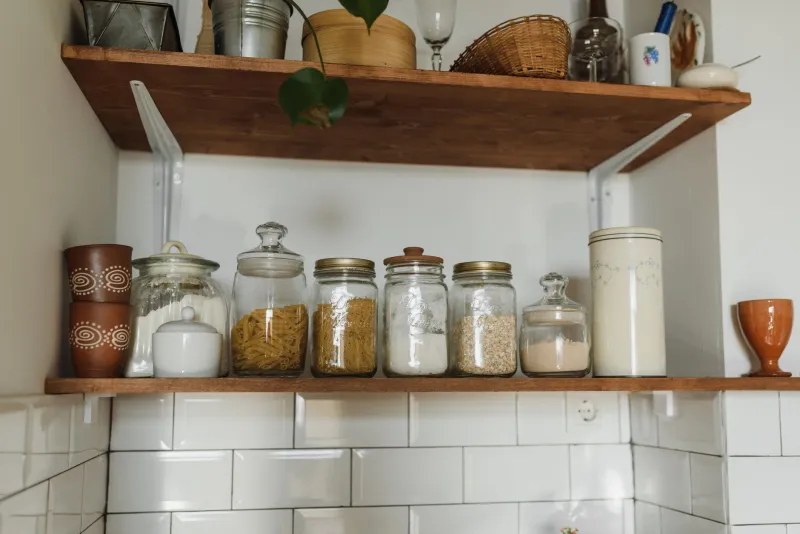
While you're at it, check for any signs of moisture clumping or (worst case) tiny pantry pests. Both are signs that your storage method needs an upgrade. Airtight canisters — glass or BPA-free plastic — are your best friends here.
Spices and Extracts: The Flavor Foundation
Vanilla extract, almond extract, peppermint, lemon — these little bottles are the soul of so many recipes, and yet they're often the most neglected part of the pantry. Pure extracts, when stored properly in a cool, dark spot, can last 4 to 5 years. Imitation extracts tend to fade faster, usually around 2 to 3 years.
Open each bottle and take a sniff. A strong, clean scent means it's still doing its job. A faint, vaguely chemical smell? That's your sign to replace it.
For spices — cinnamon, nutmeg, cardamom, ginger — ground versions stay potent for about 2 to 3 years, while whole spices (like whole nutmeg or cinnamon sticks) can last up to 4. The rub test is a reliable check: rub a pinch between your fingers and smell. If the aroma is weak, the flavor in your baked goods will be too.
This is also a good moment to consider buying smaller quantities of spices you don't use constantly. That giant jar of allspice might seem like a bargain, but not if half of it goes stale before you get through it.
Fats, Sugars, and Everything Else
Butter stored in the freezer keeps for up to 9 months — a great option if you stock up during a sale. In the fridge, it's good for about a month. If your butter tastes or smells rancid, it'll ruin whatever you bake with it. Don't risk it.
Shortening and vegetable oil should be checked for any off smells as well. Oils oxidize over time, especially once opened, and rancid oil is a flavor killer.
Sugar — granulated, brown, and powdered — doesn't technically expire, but it can harden, clump, or absorb odors from nearby pantry items. Keep brown sugar in a sealed bag or airtight container with a terra cotta brown sugar saver disc to keep it soft. If it's already turned into a brick, a slice of bread or a damp paper towel left in the container overnight usually does the trick.
Yeast deserves its own moment of attention. If you bake bread regularly, you probably go through it quickly. But if that little jar of active dry yeast has been sitting in your cabinet since last Thanksgiving, proof it before you commit to a full loaf. Mix a teaspoon with warm water (around 110°F) and a pinch of sugar. It should foam within 10 minutes. If it doesn't, your bread isn't going anywhere.
Your Seasonal Pantry Audit Checklist
Here's a simple checklist to run through each season — or at minimum, every spring and fall:
- Baking powder & baking soda — test for activity, check the open date
- All-purpose flour — smell check, look for clumping or pests
- Whole grain flours — move to freezer if not already there
- Extracts — sniff test, check dates
- Ground spices — rub test, replace anything older than 3 years
- Yeast — proof test if it's been more than a few months
- Butter and oils — smell test, check for rancidity
- Brown sugar — check texture, use a softener if needed
- Chocolate chips, cocoa powder — taste a chip, smell the cocoa
- Nuts and seeds — taste for freshness, freeze extras
The Philosophy Behind the Audit
Here's the thing: baking is a science, but it's also an act of care. When you take the time to know what's actually in your pantry — really know it — you're setting yourself up to bake with intention. You're not just following a recipe; you're giving every ingredient a fair shot at doing its best work.
At Sweet Pea Bakery, we talk a lot about baking with love. And honestly? Part of that love is showing up for the prep work. Restocking that tin of baking powder, transferring flour into a proper canister, labeling everything with a date — these small habits compound into consistently better results.
So this spring, before you dive into the strawberry shortcakes and the lemon bars and the fresh-herb focaccia, spend twenty minutes with your pantry first. Open things. Smell things. Taste things. Toss what needs to go, replace what's earned it, and step into the season knowing that what's on your shelves is genuinely ready to help you bake something wonderful.
Your future self — the one pulling a perfectly risen cake out of the oven — will thank you.