Cold Butter, Sad Cake: What Ingredient Temperature Really Does to Your Baking
You followed the recipe to the letter. You measured everything twice. You even set a timer. And yet—dense cake. Greasy cookies. Frosting that looks like it's crying. Sound familiar?
Here at Sweet Pea Bakery, we've troubleshot enough baking disasters to know that the culprit is often hiding in plain sight: ingredient temperature. It's one of those things that recipes mention almost as an afterthought—"2 eggs, room temperature"—but rarely explain. And when you don't know why it matters, it's easy to skip.
So let's fix that. This is your warm (pun absolutely intended) introduction to the science of ingredient temperature—and how getting it right can transform your baking from "pretty good" to genuinely great.
What "Room Temperature" Actually Means
First, let's clear something up. Room temperature doesn't mean whatever your kitchen happens to be on a July afternoon in Phoenix or a February morning in Minnesota. In baking, "room temperature" typically refers to around 65–70°F—cool enough to hold its shape, warm enough to be pliable and reactive.
For butter, that means it should yield slightly when you press your finger into it, but it shouldn't be greasy or melting at the edges. For eggs, it means they've lost that refrigerator chill. For cream cheese? Think soft and spreadable, not stiff and crumbly.
When a recipe specifies room temperature ingredients, it's not being fussy. It's giving you the conditions under which the chemistry actually works.
The Emulsification Situation
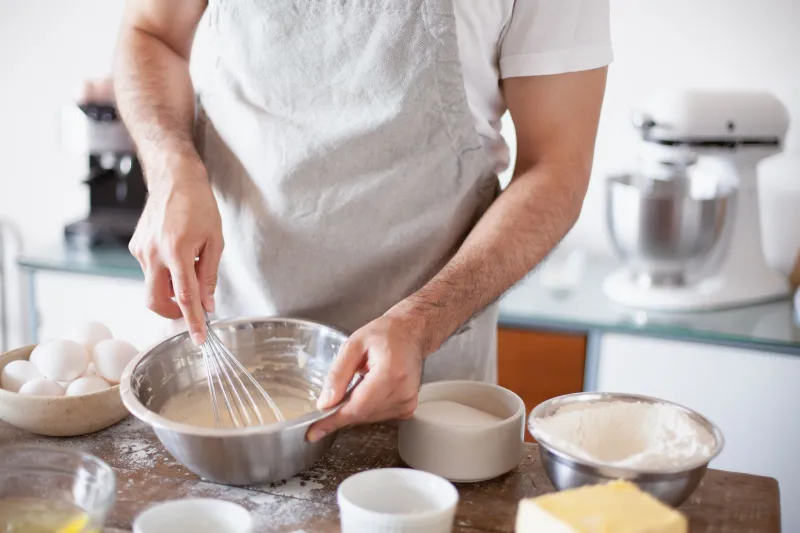
Here's where things get genuinely interesting. When you cream butter and sugar together—or beat eggs into a batter—you're creating an emulsion: a stable mixture of fat and water that would otherwise refuse to coexist. Think of it like convincing oil and water to be friends. It takes the right conditions.
Cold butter is too firm to trap air properly. When you beat it with sugar, instead of creating thousands of tiny air pockets (which is what gives cakes their lift), you end up with a dense, uneven mixture. The sugar can't do its job, the air can't get in, and your cake ends up more like a doorstop than a dessert.
Cold eggs introduce a different problem: they can cause the butter to seize up and curdle the batter. You've probably seen this—that moment when your beautiful, creamy mixture suddenly looks broken and lumpy. That's temperature shock. Cold fat meeting warm fat and refusing to cooperate.
Warm eggs, on the other hand, blend seamlessly. They help the emulsion stay stable and contribute to a smoother, more uniform crumb.
Gluten, Temperature, and Why Your Pie Crust Needs the Cold Shoulder
Now here's the flip side—because baking loves a good contradiction. While cakes and cookies want warm ingredients, pie crust is the exception that proves the rule.
For a flaky pie crust, you actually want cold butter, cold water, and cold everything. Here's why: gluten forms when flour proteins hydrate and bond together. The more you work the dough and the warmer it gets, the more gluten develops—and the tougher your crust becomes. Cold butter also stays in distinct chunks, which is exactly what creates those gorgeous, shatter-y layers when the butter steams in the oven.
So when you see a pie crust recipe telling you to chill everything—your bowl, your butter, even your hands—that's not overkill. That's precision.
The Browning Connection
Ingredient temperature also affects how your baked goods brown, which matters more than you might think. Browning isn't just about looks—it's flavor. The Maillard reaction (the same chemical process that makes a seared steak smell incredible) happens when proteins and sugars interact under heat. Caramelization is a separate but related process happening to the sugars alone.
When your eggs and butter are at the right temperature, they incorporate evenly into the batter, which means the sugars and proteins are distributed uniformly. That gives you even, consistent browning across your cookies or cake layers—no pale centers, no burnt edges.
Cold ingredients can slow this process or create uneven distribution, leading to baked goods that brown unevenly or don't develop that deep, toasty flavor you're chasing.
Simple Tricks to Get Ingredients Ready (No Special Equipment Needed)
Okay, so you're convinced. But what do you do when it's 6 p.m., you're ready to bake, and your butter is a brick?
For butter:
- Cut it into small cubes and spread them on a plate. It'll come to temperature in about 20–30 minutes at room temp.
- In a hurry? Grate cold butter on a box grater. The thin shreds warm up in minutes.
- Or microwave in 5-second bursts, checking constantly. You want soft, not melted.
For eggs:
- Place them in a bowl of warm (not hot) water for 5–10 minutes. This is the easiest trick in the book and works every single time.
For cream cheese or sour cream:
- Cube it and let it sit out for 30 minutes, or microwave in 10-second intervals, stirring between each one.
For milk or buttermilk:
- Warm it gently in the microwave—30 seconds is usually plenty. You just want to take the chill off, not heat it.
One more tip: if you live somewhere with a cold kitchen (drafty old house, anyone?), you may need a little extra time. And if your kitchen runs warm, keep a close eye—butter can go from perfect to greasy faster than you'd expect.
When Things Go Wrong: A Quick Troubleshooting Guide
Batter looks curdled or broken: Your eggs were probably too cold. Try setting your bowl over a pot of warm water for a minute or two and beating gently—it often comes back together.
Cake is dense and didn't rise well: Cold butter is the likely culprit. It couldn't trap enough air during creaming.
Cookies spread too much: Butter was too warm and started to melt before it hit the oven. Try chilling your shaped dough for 20–30 minutes before baking.
Frosting is greasy or won't hold its shape: Butter was too soft. Pop the bowl in the fridge for 10 minutes, then re-beat.
Pie crust is tough and chewy: The dough got too warm, developed too much gluten, or was overworked. Chill your ingredients next time and handle the dough as little as possible.
The Takeaway
Ingredient temperature isn't a minor detail—it's infrastructure. It affects how your fats emulsify, how your gluten develops, how evenly your baked goods brown, and ultimately, how they taste. Once you start paying attention to it, you'll notice the difference immediately.
The good news? You don't need any fancy tools or a perfectly climate-controlled kitchen. You just need a little bit of planning and the knowledge of why it matters. Because when you understand the science, following the steps stops feeling like a chore and starts feeling like baking with intention.
And that's exactly the kind of baker we love around here at Sweet Pea Bakery.